
Your Smile Is Trying to Tell You Something
Here’s the thing about luck: it usually shows up disguised as timing. St. Patrick’s Day is a reminder that sometimes the luckiest thing that can happen is simply finding the right information before a small problem becomes a much bigger one. If you’ve been quietly living with a missing tooth or putting off a conversation with your dentist about one, this might be the most important read you do this month.
Knowing the signs you need dental implants early is the difference between a straightforward solution and a complex, time-consuming one. Once a tooth is gone, your jawbone begins to change. Neighboring teeth start to shift. And what starts as a manageable gap can quietly become a much larger problem.
Consider this: nearly 178 million Americans are missing at least one tooth, and the majority are living with consequences they may not even realize are connected to that gap. The good news? Dental implants have never been more accessible, more reliable, or more natural-looking than they are today.
Call our Frisco dental practice at (460) 633-0550 to schedule your appointment! We proudly welcome patients from Frisco, Little Elm, Richwoods, and Deerfield, TX.
Here are five signs your body is trying to tell you it’s time to stop waiting.
Sign #1: You Have a Visible Gap You’ve Started Working Around
You probably know this one. It’s the slight turn of the head in a group photo. The hand that drifts toward your mouth mid-laugh. The way you’ve unconsciously started chewing on the opposite side of your mouth, or choosing seats so a certain side of your face isn’t the one people see first.
What starts as a small cosmetic concern becomes a daily quality-of-life tax. But here’s what many patients don’t realize: the problem isn’t just aesthetic. When a tooth is missing, the neighboring teeth on either side and above or below no longer have the same structural anchor. Over time, they begin to tilt and drift into the empty space. What was once a single missing tooth can become a cascade of shifting alignment that affects your bite, your jaw, and eventually how those remaining teeth wear down.
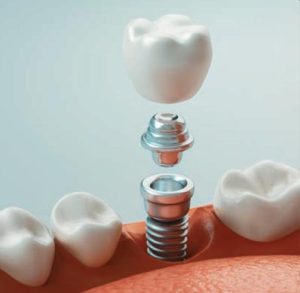
A dental implant doesn’t just fill the gap visually. The titanium post acts as an artificial tooth root, giving adjacent teeth something solid to push against exactly as nature intended. It stops the drift before it starts.
Sign #2: Chewing Certain Foods Has Become a Negotiation
Spring is almost here. That means cookouts, Easter dinners, patio brunches, and al fresco meals — all the eating occasions that require a full, functioning bite. If you’ve started quietly avoiding certain foods — skipping the steak at a restaurant, cutting corn off the cob instead of biting into it, passing on anything crunchy — that’s your missing tooth affecting your life more than you might be admitting.
A full set of teeth distributes chewing force evenly across the jaw. When a tooth is missing, the remaining teeth absorb additional pressure they weren’t designed to handle. Over time, this leads to accelerated wear on neighboring teeth, strain on the jaw joint, and a gradual restriction in what you feel comfortable eating, which often comes with nutritional consequences that extend well beyond the mouth.
Unlike dental bridges or dentures, both of which sit above the gumline, a dental implant is embedded directly into the jawbone. It restores full bite force. That means no accommodating, no negotiating, and no menu editing. You eat what you want, the way you used to.
Sign #3: Your Jawbone or Your Face Looks Different
This one is harder to see coming because it happens gradually. But it’s arguably the most important sign on this list.
When a natural tooth root is present, the simple act of chewing sends mechanical stimulation down through the root into the jawbone. That stimulation is what signals the bone to maintain its density and volume. Remove the root (remove the signal), and the bone begins to resorb. It quite literally shrinks, because the body sees no reason to maintain mass in a location that’s no longer being used.
Within the first 12 months after tooth loss, you can lose up to 25% of the bone width in that area. Within a few years, vertical bone height follows. Patients often notice it first as a subtle hollowing in the cheek or jawline — a change in the shape of their face that they can’t quite attribute to aging alone.
This isn’t meant to alarm you. It’s meant to inform you. Because here’s the important part: an implant is the only tooth replacement option that actively preserves the jawbone, because the titanium post mimics a natural root and provides the same stimulation. Bridges and dentures don’t.
The longer a missing tooth goes unreplaced, the more bone is lost, and the more bone that’s lost, the more complex future implant placement becomes. Bone grafting may be required before an implant can be placed, which adds time and cost. Early action almost always means simpler treatment. If you’ve noticed changes in your face shape or jaw, don’t wait another season.
Sign #4: Your Dentures Don’t Fit the Way They Once Did
If you’re currently wearing dentures and finding that they’re slipping more, requiring more adhesive, creating sore spots that weren’t there before, or just not feeling as secure as they used to, you’re experiencing the downstream effect of jawbone resorption in real time.
Here’s the cycle that occurs with conventional dentures: dentures rest on the gum surface and don’t transmit any chewing pressure into the bone. With no stimulation, the bone continues to resorb. As the bone changes shape, the dentures that were molded to fit that shape no longer fit correctly. They loosen. They shift. Chewing becomes less effective, speaking becomes self-conscious, and adhesives become a daily fixture.
Dentures typically require professional refitting every 5 to 7 years as the jaw changes — and that timeframe accelerates the longer they’re worn without addressing the underlying bone loss.
Implant-retained dentures — and full-arch solutions like All-on-4 — break this cycle entirely. The implant posts provide the bone stimulation that prevents further resorption, and the dentures they support are dramatically more stable than conventional ones. Many patients describe the difference as transformative; suddenly, eating, speaking, and smiling feel effortless again.
If your current dentures have started to feel unreliable, that’s a signal worth discussing with the Frisco dentists at Renew Family Dentistry. There may be a better long-term path available.
Sign #5: You’ve Been ‘Waiting for the Right Time’ for More Than a Year
This might be the most honest sign of all — and the one most people quietly recognize in themselves.
The hesitation around dental implants is understandable. There’s the cost consideration. The awareness that it’s a surgical procedure, however minor. The unfamiliarity with the process. The sense that it’s something to get to “eventually.” And so the months pass, then the seasons, then the year — and the gap is still there, and the bone is still slowly changing, and the right time never quite arrived.
Here’s the reframe: waiting is the cost. Every month without a tooth root is another month of bone resorption that may require additional treatment — bone grafting, extended timelines, higher fees — before an implant can even be placed. The most cost-effective, least-complicated version of your implant treatment is available right now, before further bone loss changes your options.
And here’s the good news about timing: March is genuinely one of the best months to start. The implant process — from consultation to final crown — typically takes three to six months. Beginning now means your restored smile is ready before summer. And for patients with dental insurance, starting in spring can allow treatment costs to be strategically split across two calendar-year benefit periods, maximizing what your insurance covers.
Spring is the season of renewal. It’s the time of year people refresh their homes, their routines, and their goals. Why not their smile?

Why Patients in Frisco and North Dallas Trust Renew Family Dentistry for Dental Implants
At Renew Family Dentistry, Dr. Christopher Probst and Dr. Jiaying Ren provide comprehensive dental implant care entirely in-house — from the initial consultation and 3D imaging through implant placement and final crown delivery. Patients never need to be referred to an outside specialist, which means a more streamlined experience, clearer communication, and no inflated costs from coordinating multiple providers.
The practice uses advanced digital X-rays and panoramic imaging to plan every implant placement with precision before a single incision is made. For patients who experience dental anxiety, multiple sedation options — including nitrous oxide and oral conscious sedation — are available to keep you comfortable throughout.
Our Frisco dental office proudly serves patients across the North Dallas area. We welcome patients from Frisco, Little Elm, Richwoods, Deerfield, TX, and all surrounding communities.
Flexible financing options are available, and our team will walk you through your insurance benefits and all costs in full — no surprises.
Ready to Replace That Missing Tooth? Schedule Your Implant Consultation in Frisco Today
If any of the five signs above sound familiar, the best next step is a conversation — not a commitment. A consultation at Renew Family Dentistry gives you a complete picture of your bone density, your candidacy, your options, and a clear timeline and cost breakdown tailored to your situation.
You’ve waited long enough. This spring, give yourself the thing that’s actually worth being lucky about: a permanent, natural-looking solution that restores not just your tooth, but your confidence and your long-term oral health.
Call our Frisco dental office at (469) 633-0550 or request your appointment online today. Renew Family Dentistry is located at 5575 Warren Parkway, Professional Building 1, Suite 324, Frisco, TX 75034. We welcome patients from Frisco, Little Elm, Richwoods, Deerfield, TX, and all surrounding North Dallas communities. Dr. Christopher Probst and Dr. Jiaying Ren look forward to helping you take the next step.