What Causes Gum Disease?
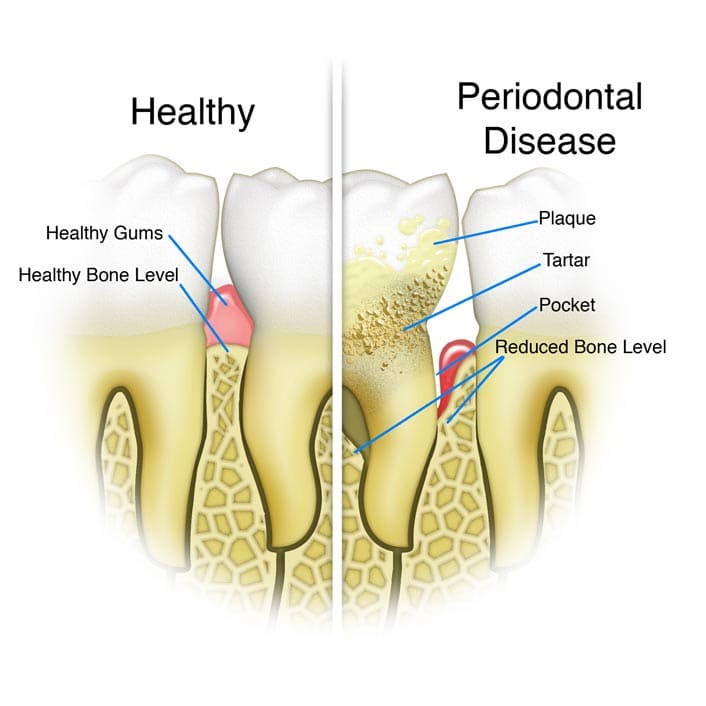
Gum disease starts with bacteria. Every mouth has bacteria, and when they combine with food particles, they form a sticky film called plaque along the gumline. Left alone, plaque hardens into tartar—a rough, mineralized buildup that only a dentist or hygienist can remove. Tartar traps even more bacteria against the gum tissue, triggering inflammation. This early stage is called gingivitis, and it’s where most gum disease treatment should start, because it’s still fully reversible.
If gingivitis isn’t treated, the bacteria work their way below the gumline, breaking down the connective tissue and bone that hold your teeth in place. That’s periodontitis, and it’s the leading cause of adult tooth loss in the U.S.
Signs You May Need Gum Disease Treatment
Gum disease is often painless in its early stages, which is why so many people don’t seek treatment until it’s advanced. Watch for:
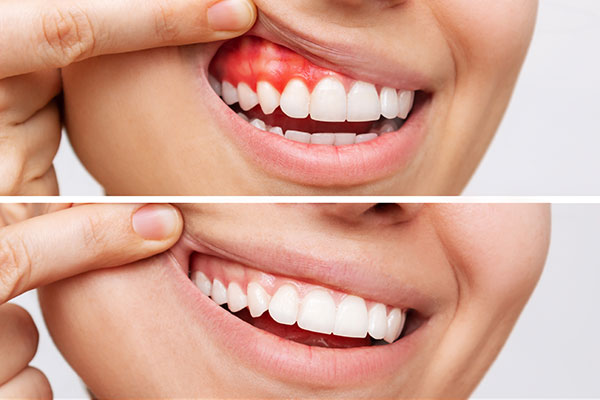
- Red, swollen, or tender gums
- Gums that bleed when you brush or floss
- Persistent bad breath that doesn’t go away with brushing
- Gum recession (teeth that look “longer” than before)
- Loose or shifting teeth
- Pus between teeth and gums
- Changes in how your teeth fit together when you bite
If any of these sound familiar, it’s worth scheduling an evaluation. A dentist near you can usually tell within one visit how advanced things are and what it will take to reverse it.

Why Gum Disease Treatment Matters for Your Whole Body
Your mouth isn’t separate from the rest of your health. When gums bleed, the bacteria causing the infection can enter your bloodstream, and research has linked chronic gum inflammation to a higher risk of:
- Heart disease and stroke
- Type 2 diabetes (and harder blood sugar control)
- Respiratory disease
- Osteoporosis and bone loss
- Rheumatoid arthritis
- Preterm birth and low birth weight
This is part of why we check gum health at every six-month visit, not just when something already hurts.
Why Choose Renew Family Dentistry as Your Gum Disease Dentist Near You?
Not every general dentist treats periodontal disease in-house. At Renew Family Dentistry, Dr. Probst, Dr. Ren, and Dr. Moore handle gum disease treatment, from early gingivitis to advanced surgical cases, without referring you out to a separate periodontist for routine care. That means fewer appointments, one care team who already knows your history, and treatment that starts sooner. Combined with our laser dentistry and digital diagnostic tools, we’re able to treat gum disease more precisely and comfortably than older methods allow.
Gum Disease Treatment Options at Renew Family Dentistry
Treatment depends entirely on how far the disease has progressed. We build every plan around your specific case—never more treatment than your gum measurements support, and never less than you need to stop the disease from advancing.
Gingivitis (early stage). A professional cleaning plus a better home-care routine is often enough to reverse gingivitis completely before any bone is lost. We’ll walk you through brushing and flossing techniques and may recommend a specific toothpaste or antimicrobial rinse.
Periodontitis (moderate to advanced). Once the infection has moved below the gumline, we perform scaling and root planing—a deep cleaning that removes bacteria and tartar from the tooth roots and smooths the surface so gum tissue can reattach. We use an ultrasonic scaler for this, which clears buildup more precisely and comfortably than hand instruments alone. Antibiotic therapy is often paired with scaling and root planing to control the infection.
Advanced periodontitis. When bone or gum tissue has already been lost, deep cleaning alone isn’t enough. Depending on your case, we may recommend:
- Osseous surgery to reduce deep pockets and reshape damaged bone
- Soft tissue grafting to rebuild gum tissue over exposed roots and stop further recession
- Guided tissue regeneration to help bone and tissue rebuild around the tooth
For patients who qualify, we also offer laser periodontal therapy through our in-office laser dentistry technology. The laser targets infected tissue with more precision than traditional tools, which typically means less discomfort and faster healing than conventional gum surgery.
Periodontal maintenance. Once your gum disease is under control, we move you onto a periodontal maintenance schedule, typically cleanings every three to four months instead of the standard six, to keep the disease from returning and protect the bone and gum tissue you have left.
Frequently Asked Questions
How do you treat bleeding gums?
Bleeding gums are almost always a sign of inflammation from plaque and bacteria along the gumline. Improving your brushing and flossing routine helps mild cases, but if bleeding continues after a week or two of better home care, it’s a sign you need a professional cleaning—bleeding gums are one of the earliest, clearest signs of gum disease.
How do you stop gum disease from getting worse?
The most important step is a professional evaluation to find out how far it’s progressed. Early gingivitis responds to a cleaning and better home hygiene. Periodontitis needs scaling and root planing, and sometimes antibiotic therapy, to stop bacteria from continuing to damage the bone and tissue supporting your teeth. Left untreated, gum disease doesn’t stay the same, but progresses.
What’s the difference between gingivitis and periodontitis?
Gingivitis is the early, reversible stage consisting of inflammation and bleeding gums, but no bone loss yet. Periodontitis is what happens when gingivitis isn’t treated: the infection spreads below the gumline and starts breaking down the bone and connective tissue holding your teeth in place. Periodontitis can be managed and stabilized, but the bone loss it causes generally isn’t fully reversible without grafting.
How long does gum disease treatment take?
It depends on severity. Gingivitis often clears up within a few weeks of a cleaning and better home care. Periodontitis typically takes several months of active treatment (scaling and root planing, possible antibiotics) followed by ongoing periodontal maintenance to keep it from coming back. We’ll give you a realistic timeline after your evaluation.
Will my dental insurance cover gum disease treatment?
Most dental insurance plans cover basic gum disease treatment, like scaling and root planing, typically at around 80% after your deductible. Coverage for more advanced procedures, such as osseous surgery or soft tissue grafting, varies more by plan. Our Frisco office will verify your benefits and walk you through your coverage before treatment begins.
Stop Gum Disease Before It Affects Your Overall Health
Protect your smile and your health, and don’t let gum disease lead to tooth loss. The team at Renew Family Dentistry offers complete periodontal care, ranging from routine preventive cleanings to advanced laser treatments and soft tissue grafting. We welcome patients from Frisco, McKinney, Plano, Allen, Little Elm, The Colony, and across the North Dallas area.
Take the first step toward better oral health today. Contact our Frisco dental office at (469) 633-0550 or schedule your appointment online to set up a comprehensive periodontal evaluation. Early intervention is key to effective treatment, so don’t delay care until pain develops.